Torcello Museum
The Museum
The Torcello Museum tells the story of Venice’s origins through a unique heritage of archaeological finds and medieval works of art, bearing witness to the island’s thousand-year history. A place of memory and discovery that guides visitors to the roots of lagoon civilization.
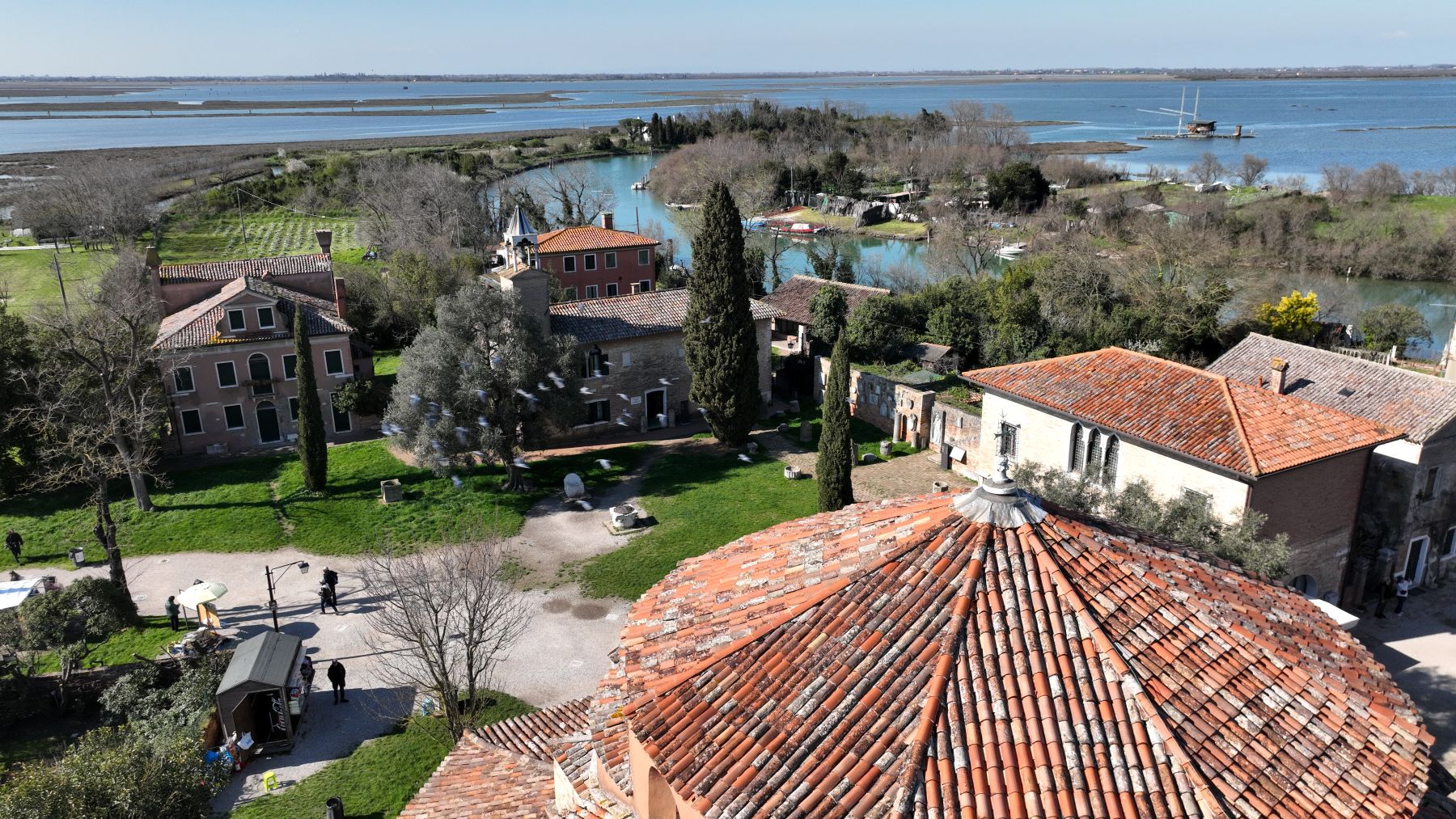
The island which was already a point of arrival and place of trade between the sea and hinterland as early as the1st century AD, a sort of early port for the Roman city of Altino, connected to the most important ancient road links with eastern and northern Europe: the Via Annia and the Via Claudia Augusta. Inhabited, with port and trading facilities and integrated into the economic system of the Roman Empire, Torcello expanded further during the centuries of the invasions and formation of the Roman‑Barbarian kingdoms, it offered the mainland population a safe place to live and form a larger community which reached its maximum size in the 10th century. Torcello was thus the lagoon city,before Rialto and Venice, a flourishing place dedicated to trade. Torcello was thus the primordial city of the lagoon.
Here, the presence of a Museum represents the stronghold of a narrative prologue that then unfolds across the other exhibition venues of the Fondazione Musei Civici di Venezia.
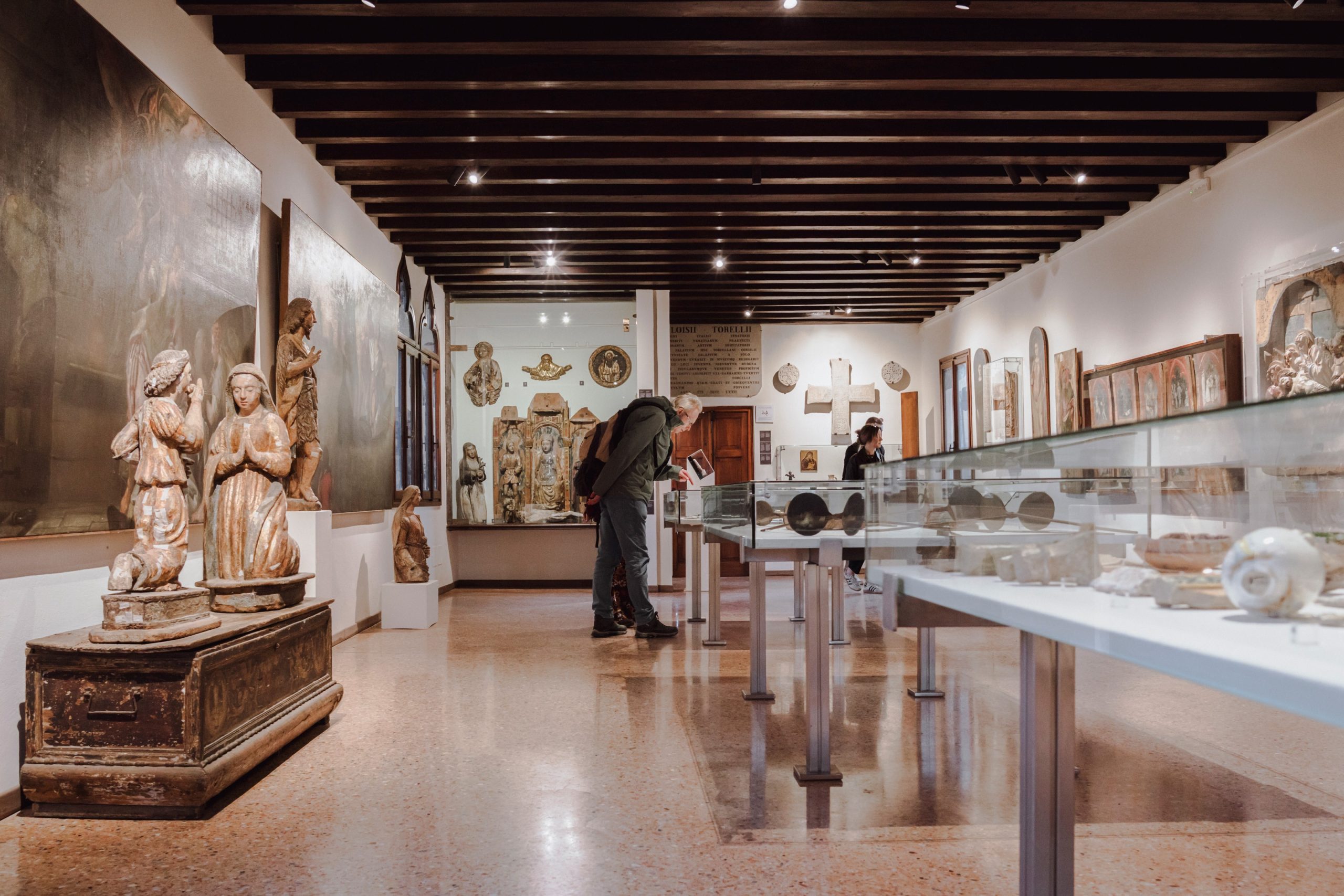
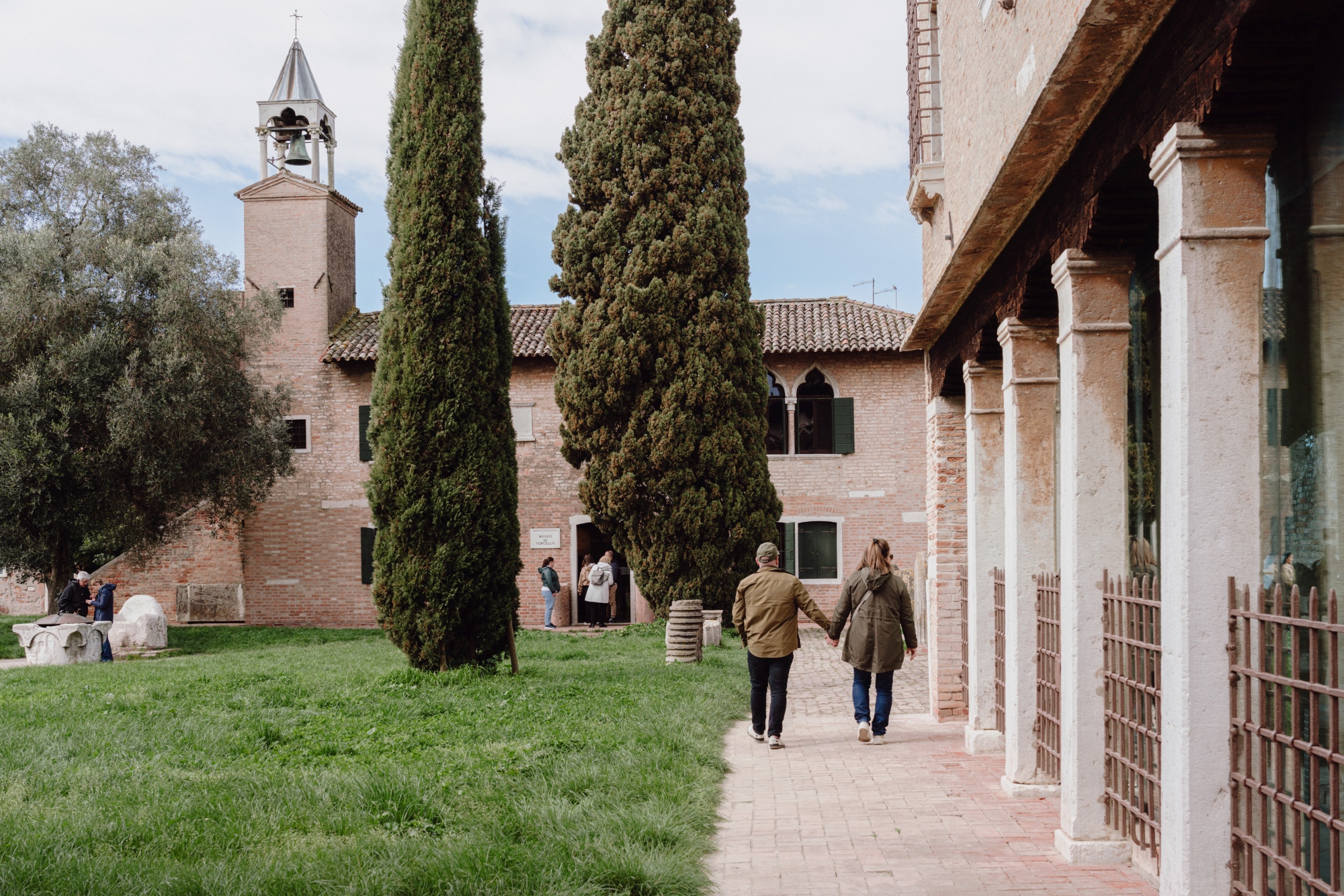
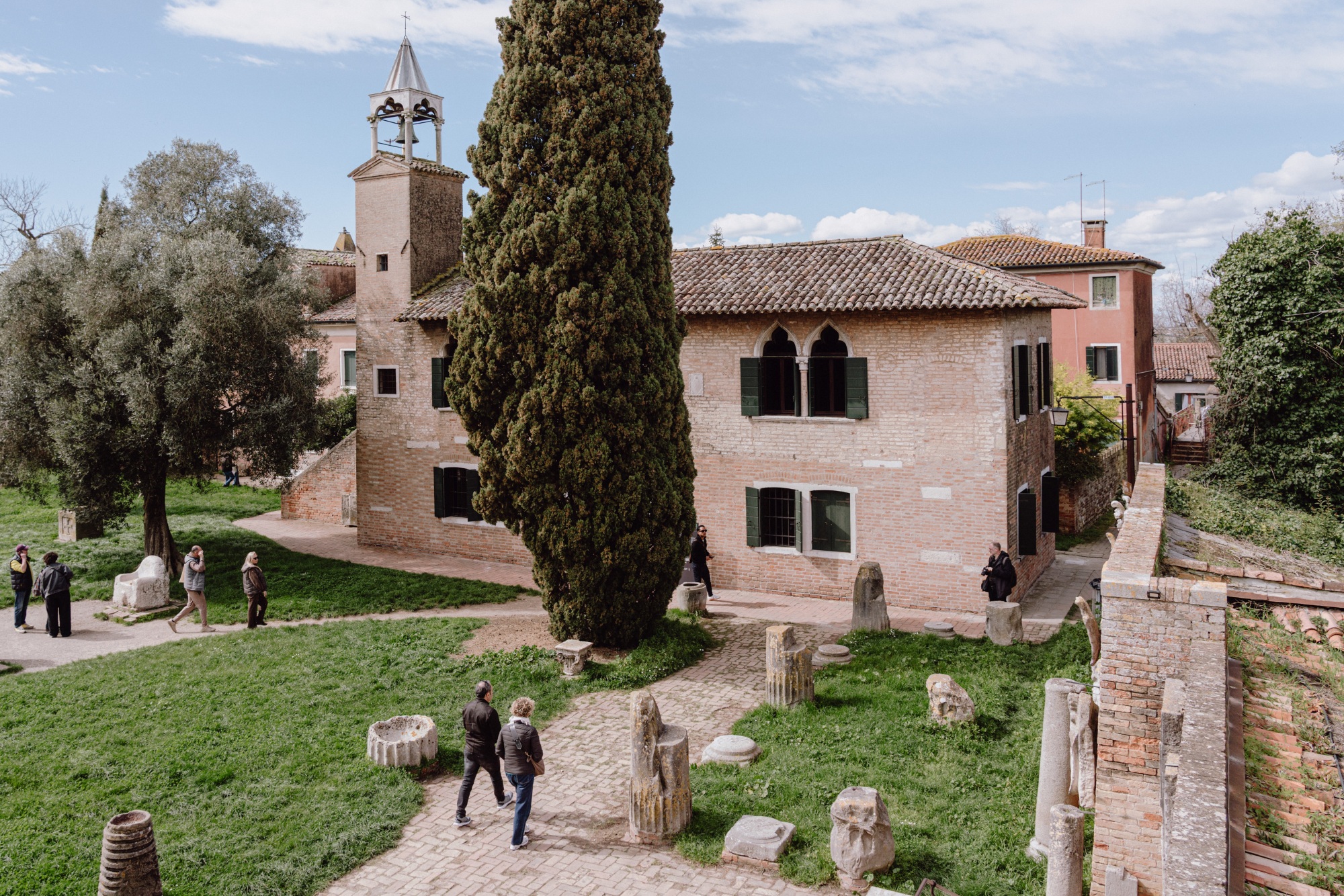
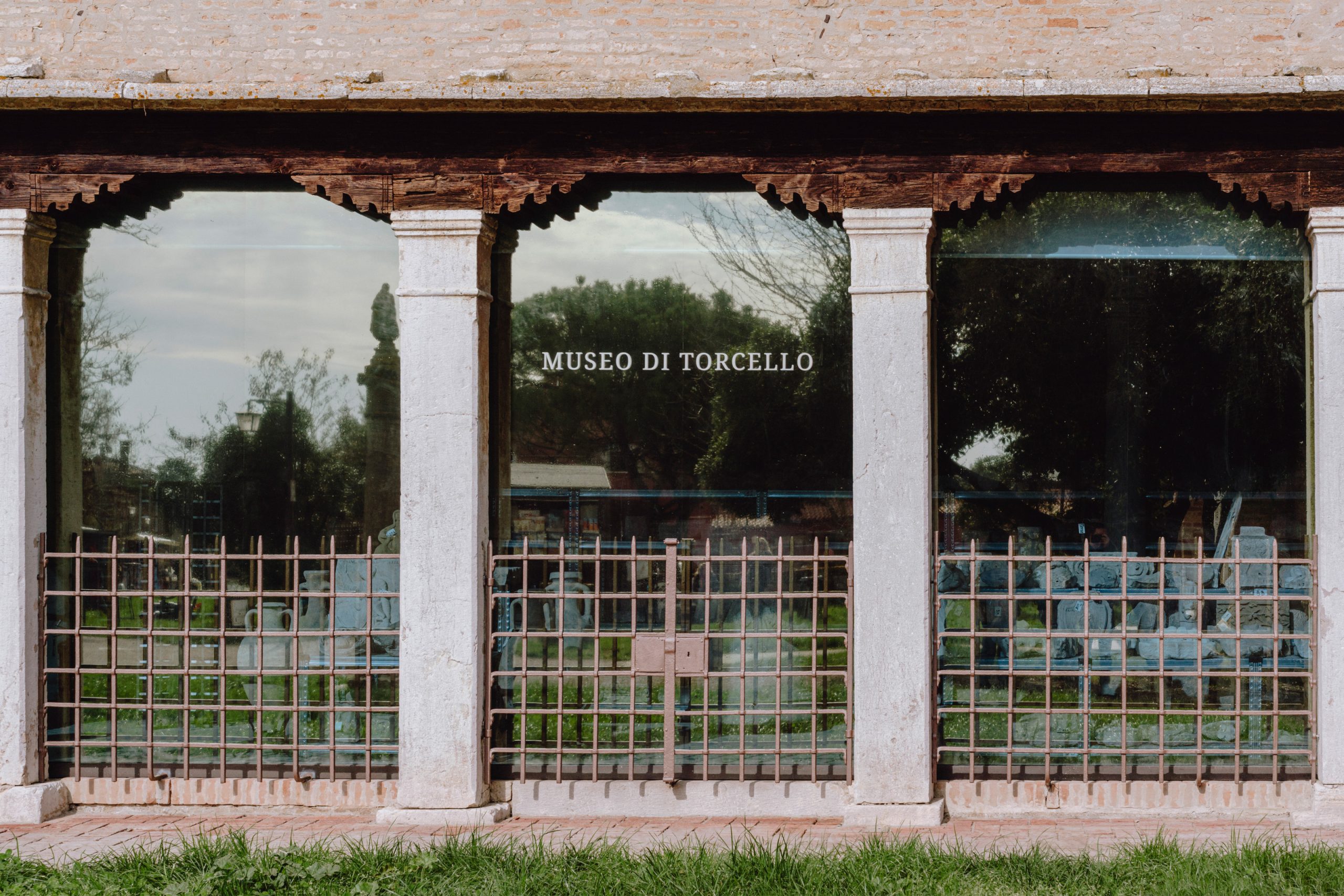
The museum is divided into two sections. The Palazzo dell’archivio houses the archeological section, while the Palazzo del Consiglio is the seat of the medieval and modern sections.
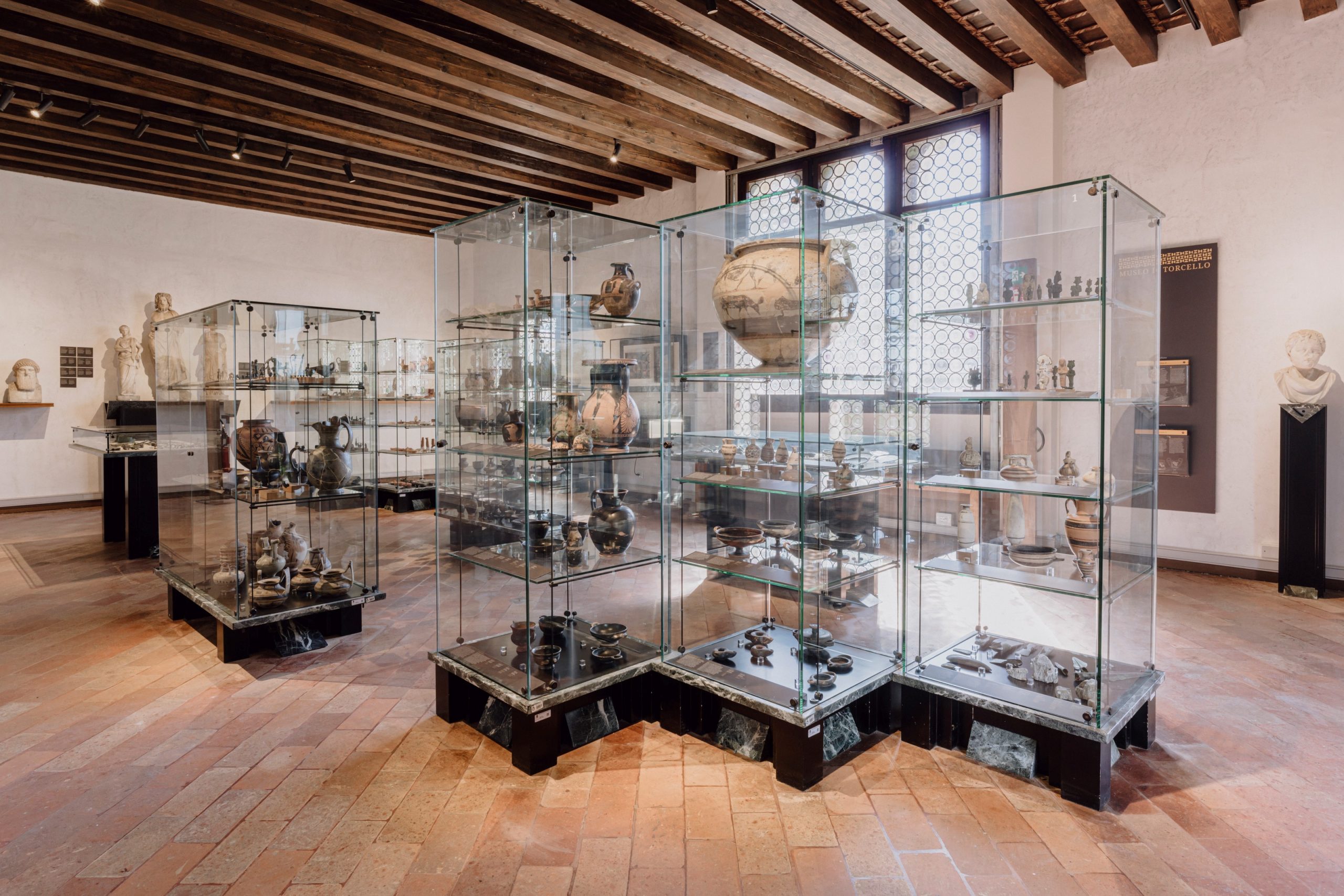
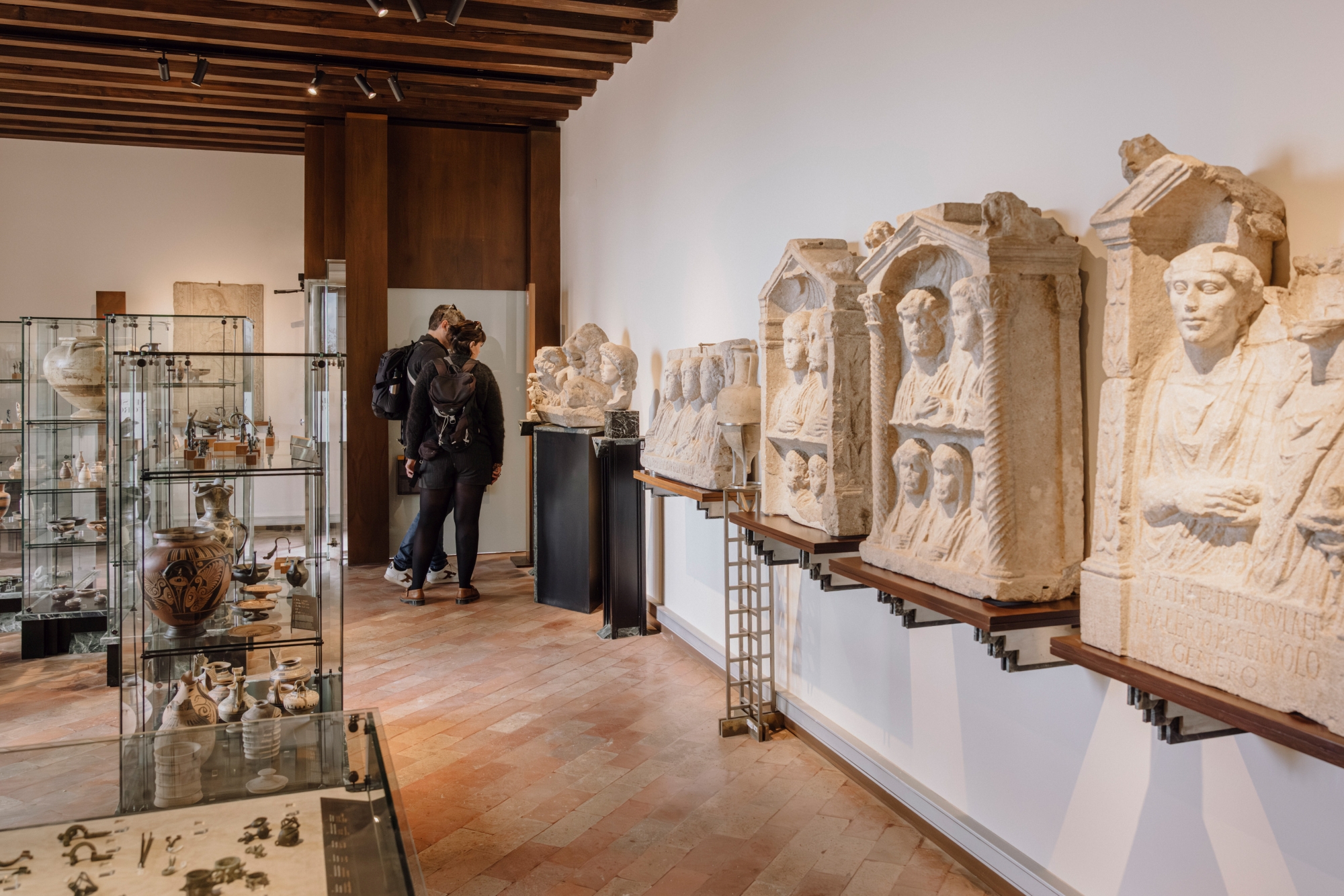
The archaeological collection, housed in the Palazzo dell’Archivio, presents a chronological itinerary ranging from prehistory to the late Roman period, through artefacts that bear witness to Greek, Etruscan, Italic, Paleoveneto and Roman cultures and setting the lagoon area in the historical context of the Mediterranean basin. The display consists partly of artefacts found on Torcello, in the lagoon and in the area around Altino and partly of objects purchased or coming from donations, including ceramics, pre-historic bronzes and Roman finds related to both religious and everyday life.
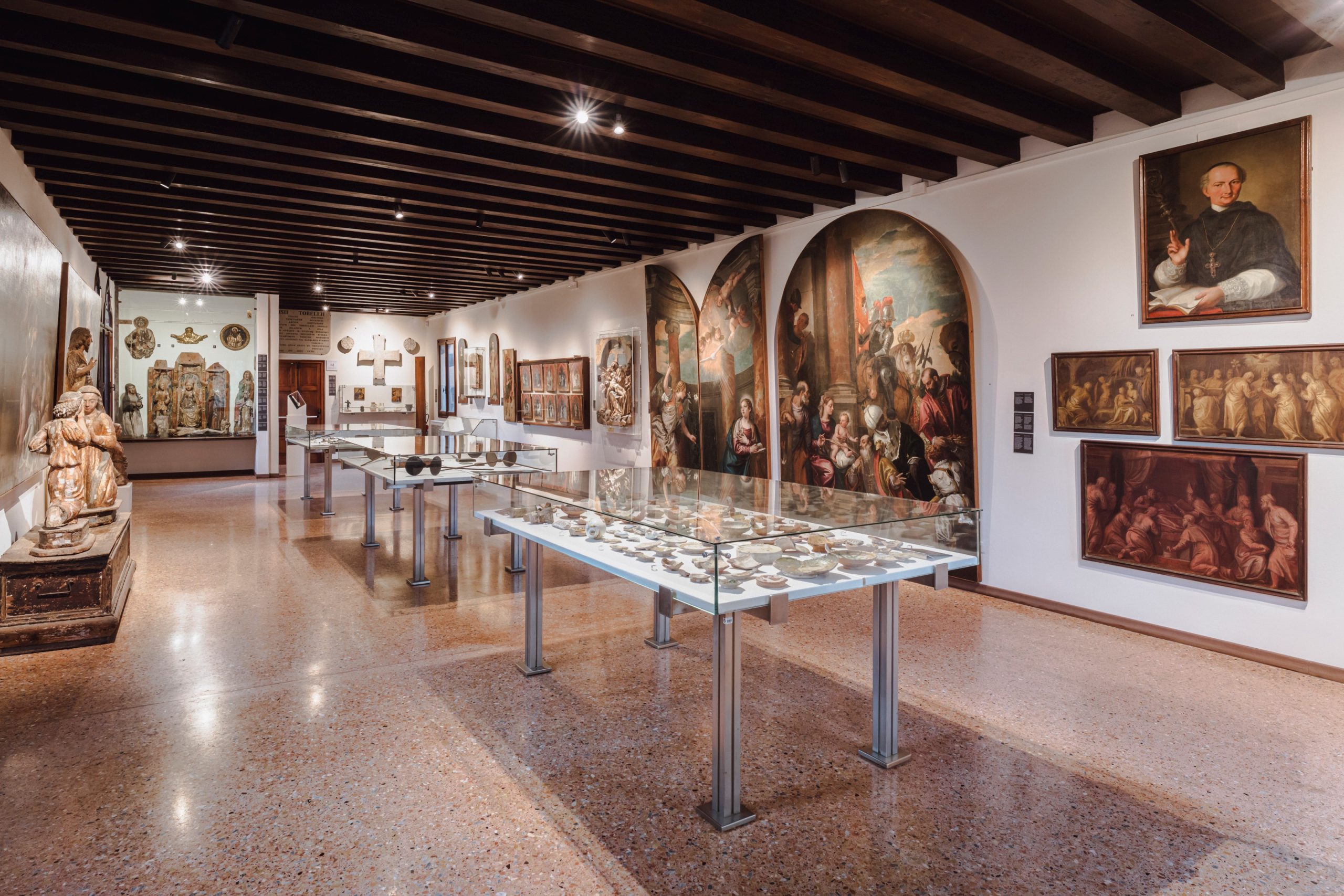
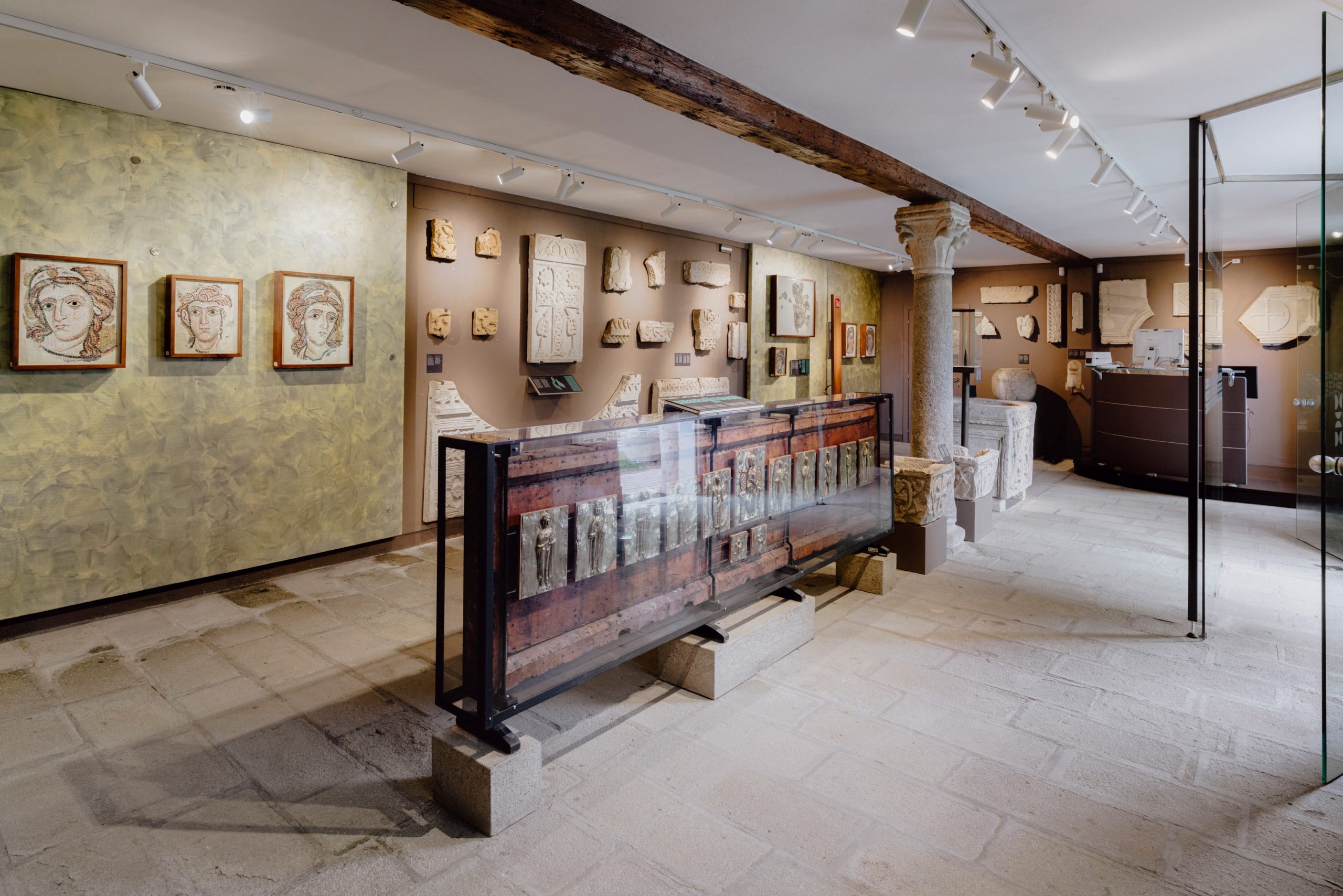
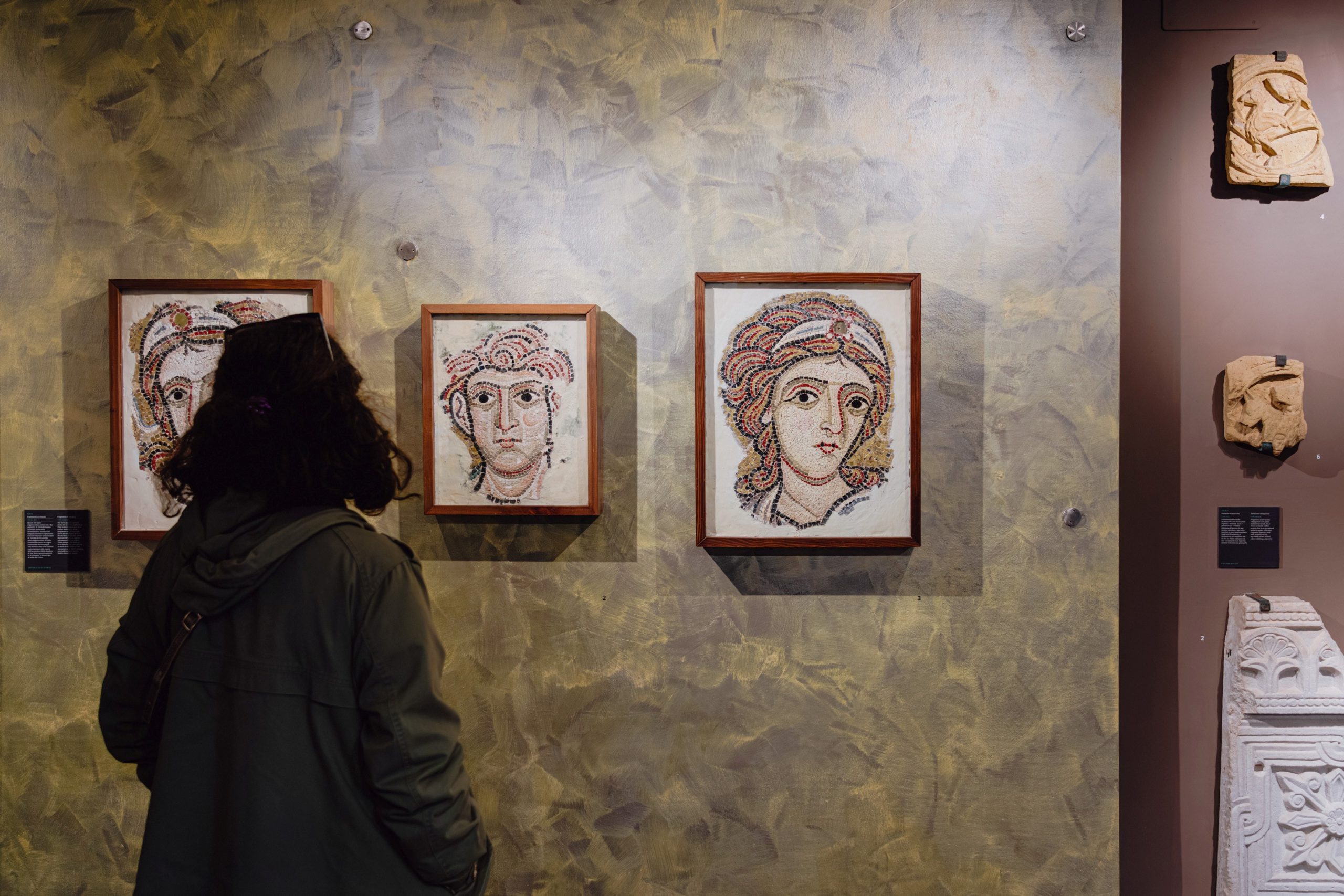
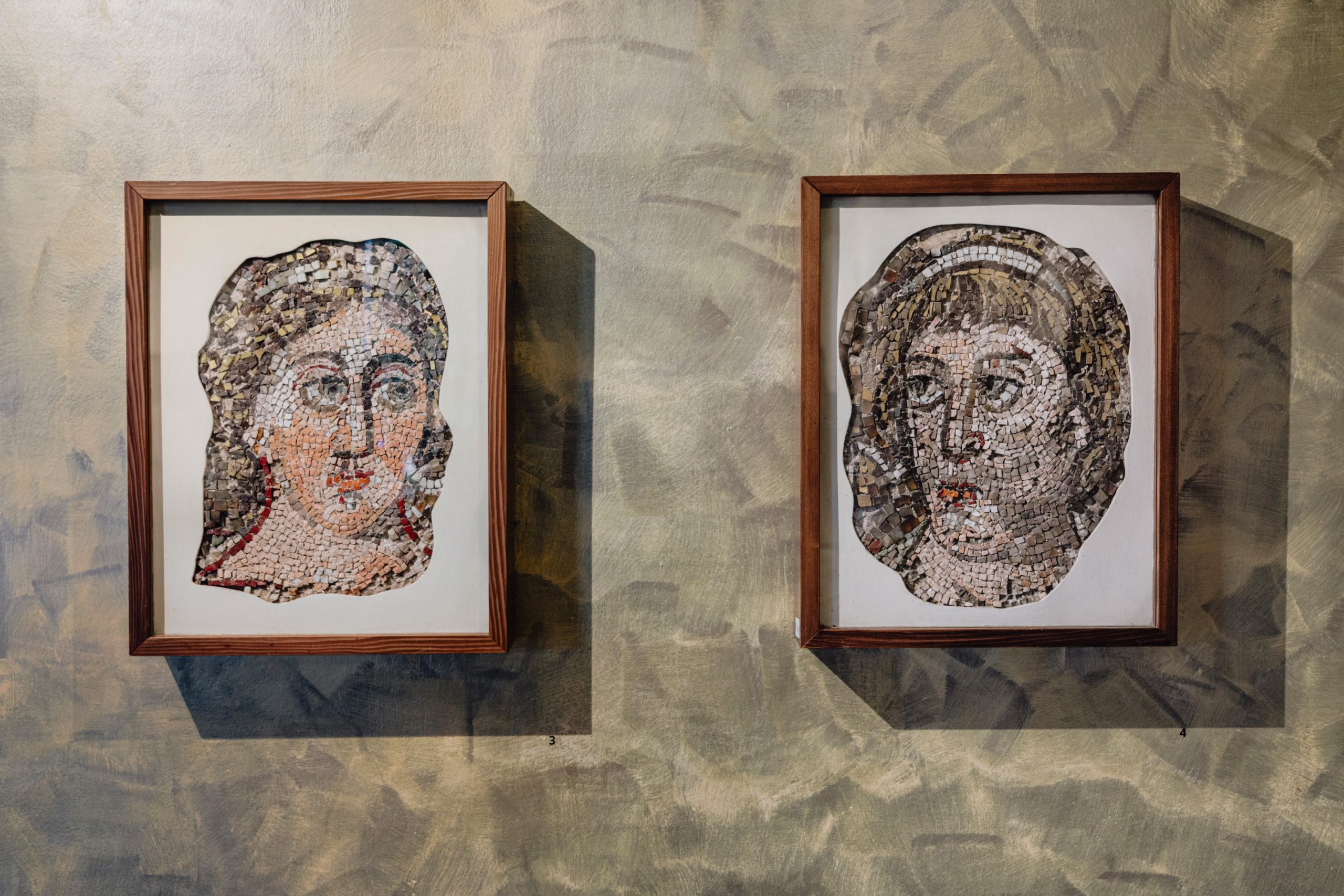
The medieval and modern section, displayed in the Palazzo del Consiglio, recounts the history of Torcello from the early centuries of the Christian era to the 19th century, highlighting its relationship with the altinate area, with Byzantine culture and the city of Venice. The itinerary features stoneworks, sculptures, paintings and other objects witness the Bizantine influence, from the reuse of Eastern decorative models to masterpieces such as the thirteenth-century gilded silver Pala d’Altare. Alongside sacred works of art, ceramics, coins, glassware and craft artefacts offer a vivid picture of daily life and economic activities in ancient Torcello.
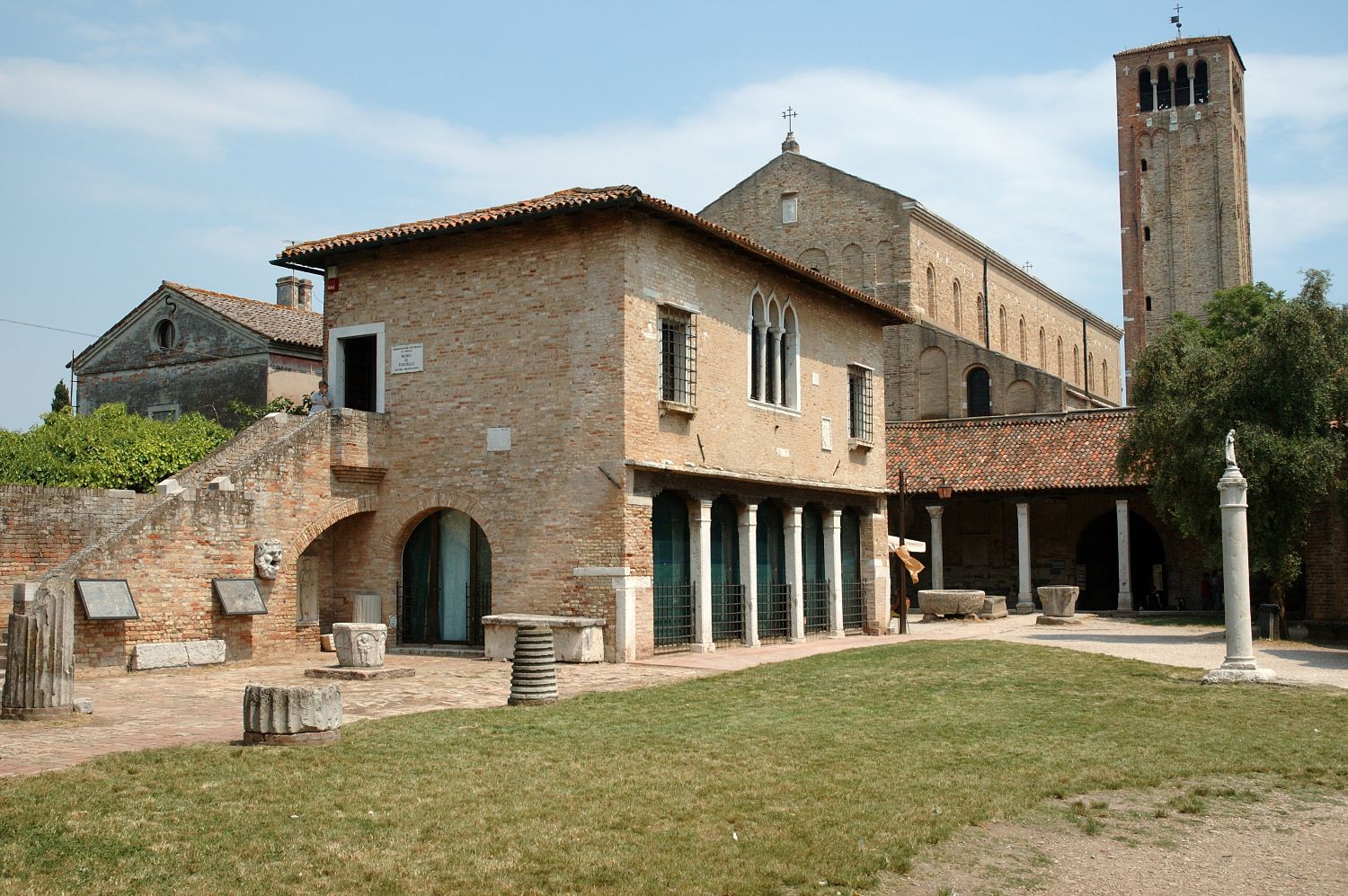
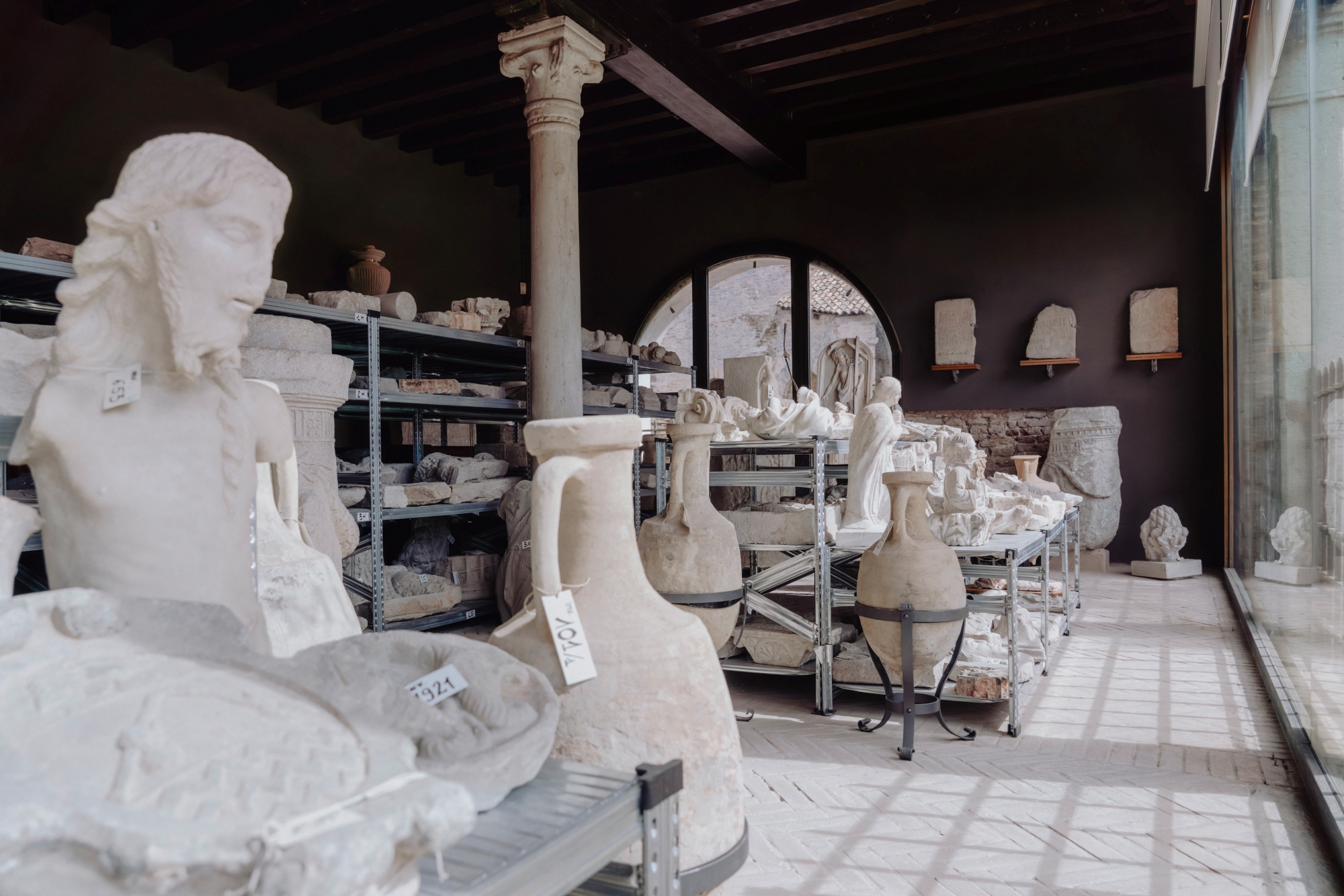
Among the first initiatives undertaken to enhance the exhibition context, MUVE has completed a series of infrastructural works, routine and extraordinary maintenance, and updates to interpretive materials to make the museum even more welcoming, culminating in the new “visible storage” installation beneath the loggia of the Palazzo dell’Archivio.
This heritage must therefore be narrated and enhanced not only for those visiting Venice who wish to discover its origins, but also for Venetians themselves, who will have the opportunity to rediscover an important legacy, significant not only from an artistic perspective but above all from a historical one.
The history of the Museum
The history of Venice is closely intertwined with its lagoon, an ecosystem of resilient fragility that embraces the city, also thanks to its constellation of islands. These islands, silent witnesses, trace a historical path shaped by trade exchanges, productive settlements and, above all, by repositories of cultural memory that keep alive the dialogue between past and future.
The history of Torcello Museum began in 1870 when Luigi Torelli, the prefect of Venice, purchased the Palazzo del Consiglio to house archaeological artifacts found out in Torcello, in the adjacent islands and in the near mainland.
In 1872 the Museum was founded with the donation of the property to the Province of Venice and the direction of the researcher Nicolò Battaglini.
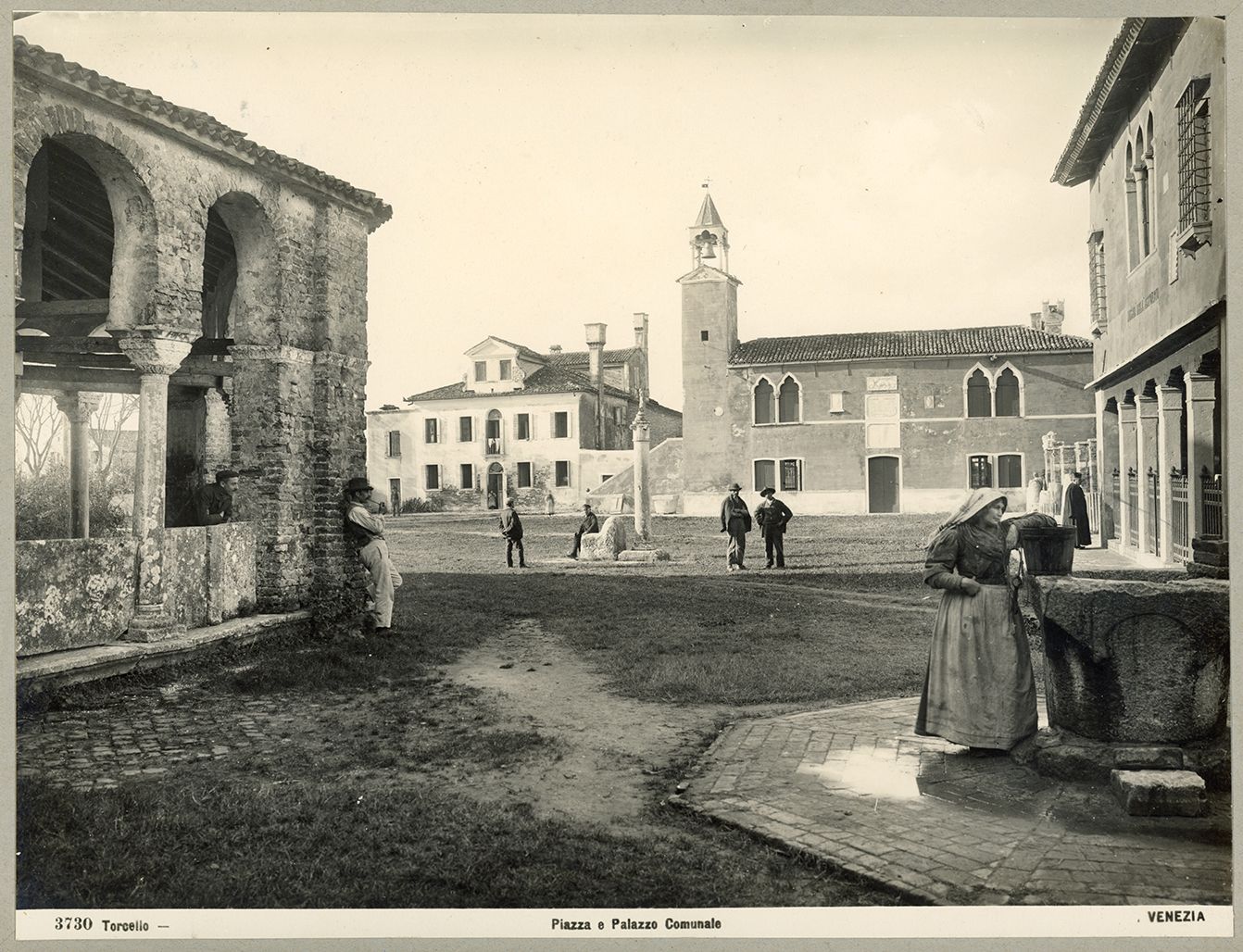
In 1887 Cesare Augusto Levi took his place, continuing the collection of findings discovered on the spot and the surroundings and adding others gathered during his travels, especially in Rome.
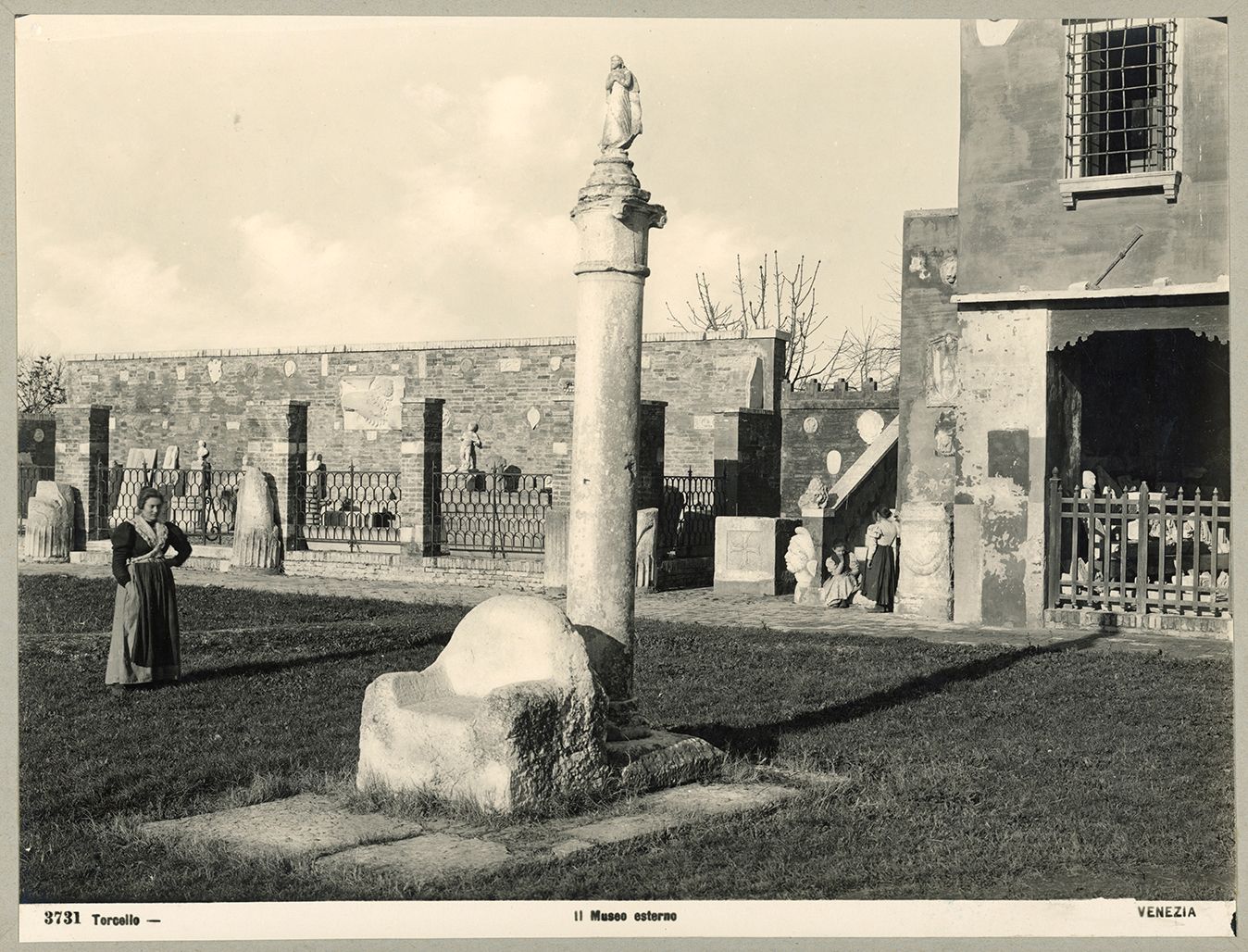
In 1887 Levi bought the Palazzo dell’Archivio and after a restoration, he donated it to the provincial authorities with the archaeological collection included. On May 14th, 1889 the museum was inaugurated.
In 1909, Luigi Conton succeeded Levi; he was the discoverer of necropolises in Adria, from where he likely brought objects to Torcello.
Between 1928 and 1930, the collections were reorganised under the supervision of Adolfo Callegari, who became the new director and remained in office until 1948. He was responsible for inventorying, cataloguing, restoring and publishing the collections.
Historical photographs: U.C.A. © Archivio Fotografico – Fondazione Musei Civici di Venezia
Opening hours
Winter season
1 November – 31 March
11.00 – 17.00
Summer season
1 April – 31 October
11.00 – 17.30
Closed on Mondays
Museum closing procedures begin 30 minutes before the indicated closing time.
NOTICE
On the occasion of the Easter holidays, on Monday, April 6, the Museum will be exceptionally open to the public.
Museum tickets
REDUCED TICKET CATEGORIES
– Children aged from 6 to 14
– Students aged from 15 to 25
– Visitors over 65
– Holders of the Venice Rolling Card
– Holders of ISIC – International Student Identity Card
FREE ADMISSION CATEGORIES
– Venetian citizens and residents
– ICOM members
– Children aged from 0 to 5
– Disabled people with helper
– Tourist guides enabled in Italy accompanying groups or individual visitors
– Accompanying teachers of school groups (up to 2 teachers per group)
– MUVE ordinary partners
– MUVE Friend Card holders
– Holders of Art Pass Venice International Foundation (valid for two people)
– Holders of Venetian Heritage Foundation membership card (valid for two people)
– Holders of Save Venice Inc. Fellow membership card (valid for two people)
– Members of “Amici dei Musei e Monumenti Veneziani”
SENIORS + JUNIOR OFFER
Reduced ticket for all paying members of groups composed of two adults and at least one youth (up to 16 years old).
SCHOOL OFFER
3,50 € per person (valid for entrance from September 1st to March 15th): for students of all schools levels accompanied by their teachers; a list of the students’ names must be provided by the school, valid also for up to two people accompanying the group.
THE ISLAND MUSEUMS
A single ticket valid for:
– Murano Glass Museum
– Burano Lace Museum
– Torcello Museum
This ticket is valid for 3 months and grants one single admission to each Museum.
A single ticket to discover the islands’ arts and their museums. Murano, Burano and Torcello are characterised on one hand by their extraordinary lagoon environment, and on the other, by expertise in traditional arts and crafts that have been handed down over the centuries.
On the island of Murano, the Glass Museum is housed in the ancient residence of the bishops of Torcello. It contains the world’s largest historical collection of Murano glass, with precious pieces produced between the 15th and 20th centuries, many of them world-famous masterpieces.
The Lace Museum on Burano documents five centuries of the art of Venetian lace-making through around 200 exquisite original examples.
The Torcello Museum tells the story of Venice’s origins through a unique heritage of archaeological finds and medieval works of art, bearing witness to the island’s thousand-year history.
REDUCED TICKET CATEGORIES
– Children aged from 6 to 14
– Students aged from 15 to 25
– Visitors over 65
– Holders of the Venice Rolling Card
MUSEUM PASS
The Museum Pass is the cumulative ticket for the permanent collection of the Musei Civici of Venice currently open and for those connected (Clock Tower not included). This ticket is valid for 6 months and grants one single admission to each museum.
The Museum Pass grants entrance to the following museums:
– Doge’s Palace
– Combined itinerary of Museum Correr, National Archaeological Museum of Venice, Monumental Rooms of the Biblioteca Nazionale Marciana
– Ca’ Rezzonico – Museum of 18th Century Venice
– Museum of Palazzo Mocenigo
– Carlo Goldoni’s House
– Ca’ Pesaro, International Gallery of Modern Art + Oriental Art Museum
– Glass Museum – Murano
– Lace Museum – Burano
– Natural History Museum
– Fortuny Museum
– Torcello Museum
– MUVE exhibitions organized at the Candiani Cultural Center in Mestre
Check the other combined tickets of the Musei Civici di Venezia >
REDUCED TICKET CATEGORIES
– Children aged from 6 to 14
– Students aged from 15 to 25
– Visitors over 65
– Holders of the Rolling Venice Card
– Holders of ISIC – International Student Identity Card
SENIORS + JUNIOR OFFER
Reduced ticket for all paying members of groups composed of two adults and at least one youth (up to 16 years old).
Information and bookings
Call center: 848082000 (from Italy); +39 041 42730892 (only from abroad).
From Monday to Friday 09.00-16.00, Saturdays and Sundays 09.00-13.00.
Email: prenotazionivenezia@coopculture.it
How to get there
Torcello Museum
Piazza Torcello
30142 Torcello Venezia
Tel. +39 041/730761
VAPORETTI
Line 12 VENEZIA (F.te Nove) – MURANO – MAZZORBO – BURANO – TREPORTI – PUNTA SABBIONI (and bank)
Line 9 Burano – Torcello (and back) With transfer in Burano.
From Venice: Fondamenta Nuove – Burano – Torcello.
From the mainland: Punta Sabbioni – Treporti Burano – Torcello.
For further information on Venice’s public transportation, please check the following website:
ACTV (linee di navigazione e di terra) www.actv.it